
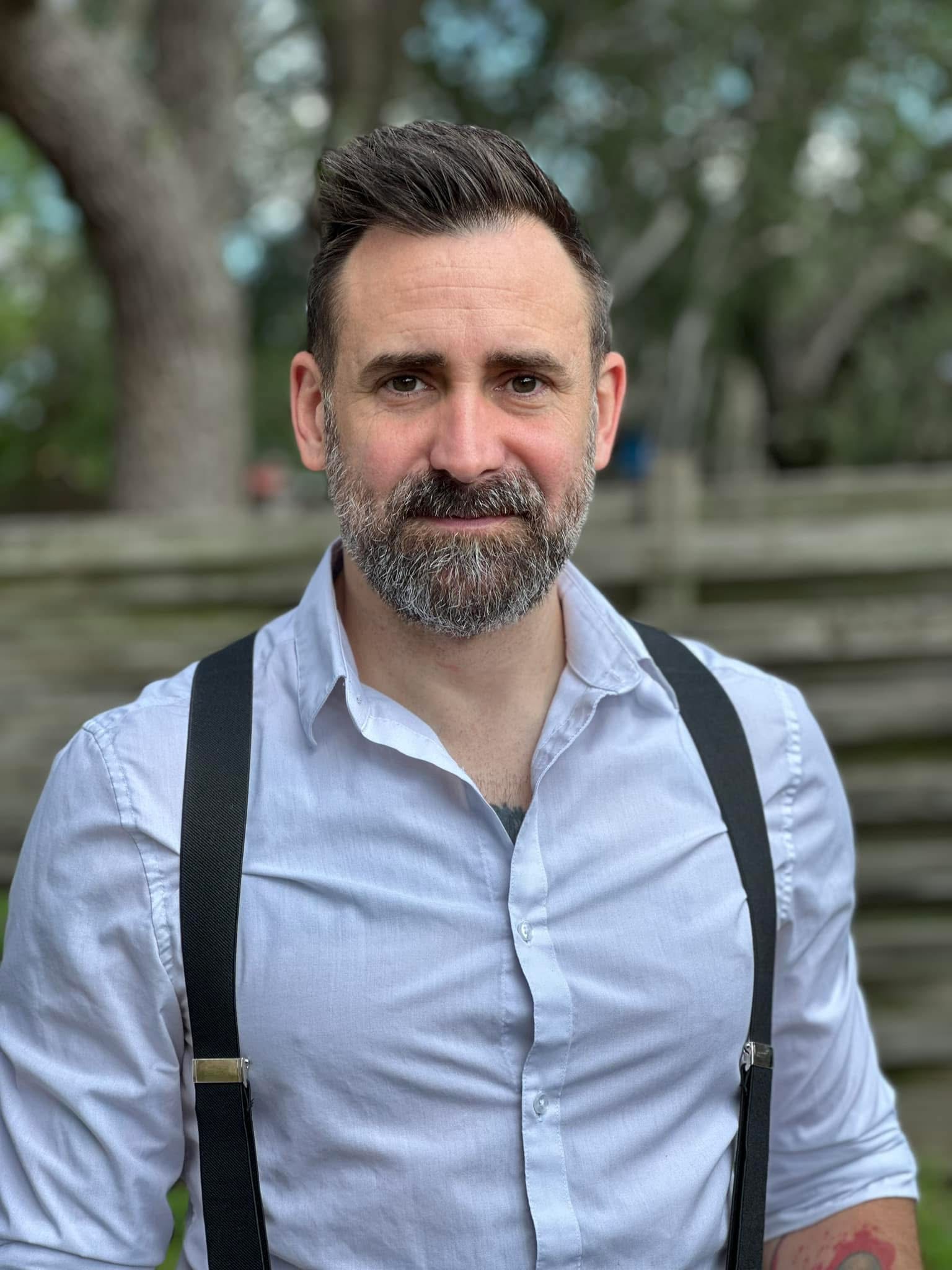
Sul Ross State University has named Dr. Adam Johnson as the next director of the Center for Big Bend Studies (CBBS), bringing an environmental anthropologist with experience in human-wildlife relationships and a strong connection to West Texas to lead CBBS into its next chapter.
Johnson, currently an assistant professor of anthropology at the University of Texas at Arlington, will officially join Sul Ross in January 2027.
“Adam comes to CBBS at an exciting time, as Sul Ross expands opportunities for students to study anthropology and CBBS builds on nearly four decades of research in the Big Bend region,” said Dr. Louis Harveson, associate provost for research and development at Sul Ross State University. “He respects the tremendous archaeological legacy of CBBS, but he also sees opportunities to broaden our reach, engage more students and strengthen CBBS connections across the university and throughout the region.”
For Johnson, the opportunity brings together the things that have shaped his academic career: teaching and mentoring students, conducting field research and exploring the relationships between people and the natural world.
“This is exactly what I want to do in my career,” Johnson said. “I want to direct a center. I want to interact with students. I want to do research. I want to make sure that people are successful.”
Johnson grew up in rural North Carolina, spending much of his childhood outdoors on his grandparents’ farm. He entered college as a biology major before discovering anthropology offered a way to combine his interests in people, animals, ecology and field research.
He earned a bachelor’s degree in anthropology and philosophy from East Carolina University in 2014 and a master’s degree in anthropology from the University of North Carolina at Charlotte in 2017. He later taught at UNC Charlotte before moving to Texas in 2019 to pursue his Ph.D. in anthropology at the University of Texas at San Antonio.
His final semester teaching at UNC Charlotte was marked by an extraordinary event that ultimately reinforced his commitment to academia. On April 30, 2019, a former student entered Johnson’s classroom and opened fire, killing two students and injuring four others. Johnson and dozens of other students escaped physically unharmed.
In the aftermath, Johnson considered whether he could return to a classroom. Instead, the experience strengthened his resolve to continue.
“If I still had this burning desire to teach, to work with students and to do research even after this happened, that must mean this is my passion,” Johnson said.
Johnson completed his doctorate at UTSA in 2024. His dissertation explored how Texans and javelinas coexist across the state, research that brought him to Alpine and throughout the Big Bend region. That work became the basis for his first book, Living with Javelinas: Multispecies Conviviality in Texas, forthcoming from the University of Texas Press in October 2026.
At CBBS, Johnson sees an opportunity to build on its archaeological research while expanding its work across other areas of anthropology. That vision comes as Sul Ross has launched a new Bachelor of Arts in Anthropology and is developing a Master of Arts in Anthropology.
“I want to continue to expand that,” Johnson said. “Right now, it’s very archaeology focused. I’m an environmental anthropologist, so I’m thinking about ways to expand that to be more inclusive of other subdisciplines of anthropology.”
Johnson also places a high priority on strengthening CBBS connections with the people who live in the region.
“I want to work really hard to get CBBS to feel like an inextricable part of Alpine and of the Big Bend region,” he said. “When people have questions or problems, I want CBBS to be one of the first places they think of as a place that can help.”
Johnson hopes to establish CBBS even more firmly as a regional research hub that attracts students and researchers from across Texas and beyond. For him, there is also a simpler reason to look forward to making Alpine home.
“It’s important to me to live in a place that is beautiful because every morning I have to wake up there and live there,” Johnson said. “It’s hard to find an area more beautiful than the Chihuahuan Desert.”