
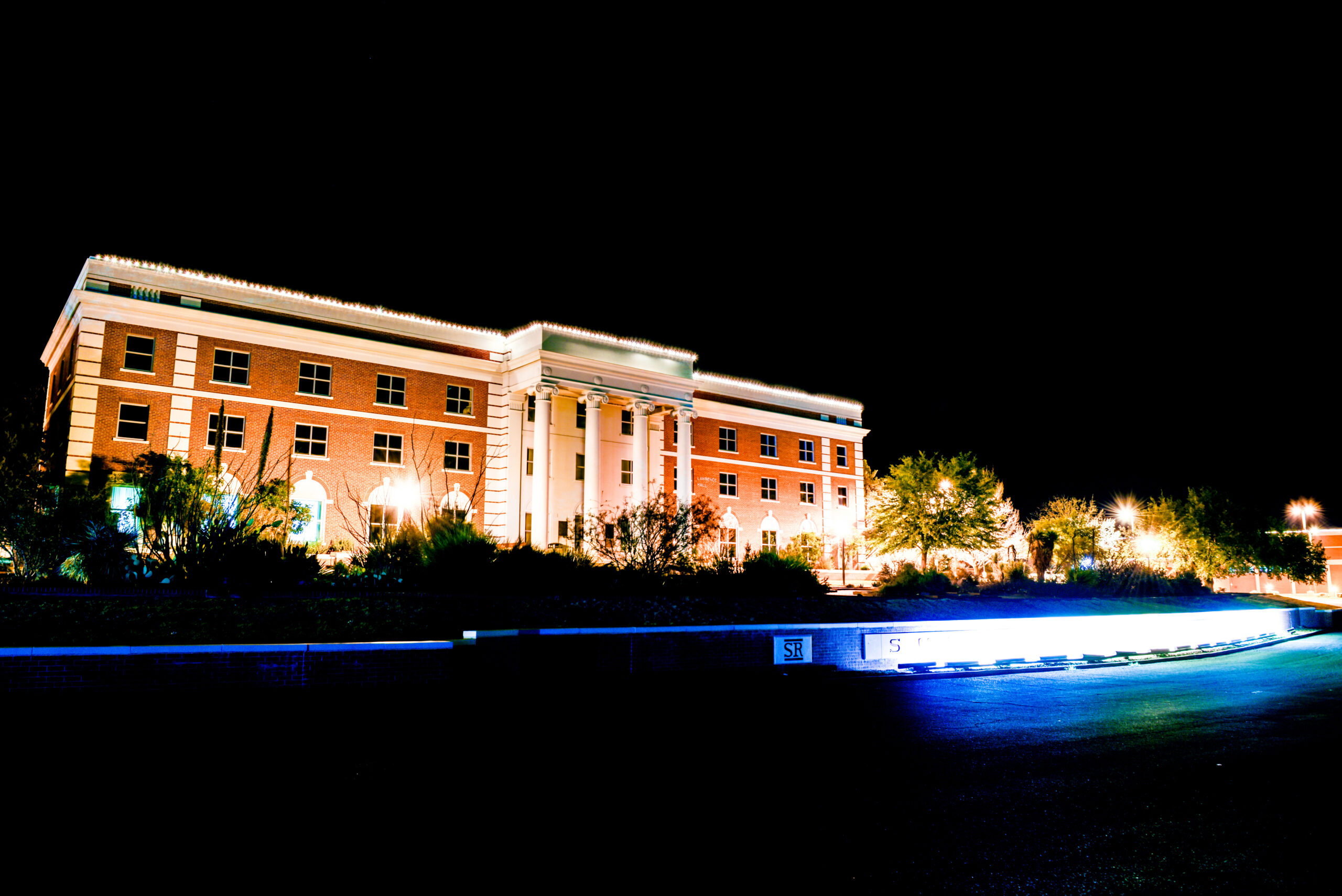
“Texas Study Abroad,” an innovative program recently launched by Alvin Community College to give students an immersive, hands-on academic experience, included a featured stop at Sul Ross State University and the Big Bend region last week
Supported by an Alvin Community College Foundation Innovation Grant, the program was designed to enhance student success and engagement through experiential learning. The initiative was part of the Honors-level History of Texas course and took students on an eight-day journey exploring key prehistoric and historic sites across Texas.
Led by ACC History Department faculty Christopher Chance and Dr. Alexander Marriott, the program served a cohort of at least 8–10 students. The experience emphasized direct engagement with Texas history, allowing students to move beyond the classroom and interact with the state’s cultural and historical heritage firsthand.
During their time in Alpine, students collaborated with Sul Ross faculty and participated in lectures, workshops and group activities designed to deepen their understanding of the region. The visit included a director-led tour of the Museum of the Big Bend, an archivist-guided experience at the Archives of the Big Bend, and programming through the Center for Big Bend Studies.
The Big Bend portion of the trip featured expert-led, immersive experiences including a professor-guided exploration of Big Bend National Park, and an astronomer-led star party at the McDonald Observatory near Fort Davis. Students also visited significant cultural and historical sites across the region, including Fort Davis National Historic Site, Fort Leaton in Presidio, the Blackwell School National Historic Site in Marfa and The Chinati Foundation.
The program addressed key gaps in experiential learning by providing students, many of whom may not otherwise have had the opportunity to travel, with meaningful, place-based education. Research shows students retain information more effectively when actively engaged, and the initiative supported retention, engagement and academic achievement through real-world application.
In addition to travel and site visits, students completed field assignments, presentations and reflective coursework to integrate their experiences with academic content. Each participant also completed an honors project, which included options such as a primary-source research paper, historical mapping project or historiography presentation.
The project represented a strategic investment in high-impact teaching practices and institutional collaboration. The partnership with Sul Ross State University strengthened academic connections while creating new opportunities for student engagement and future programming.